Mo Dewji: Scaling heights of remarkable success
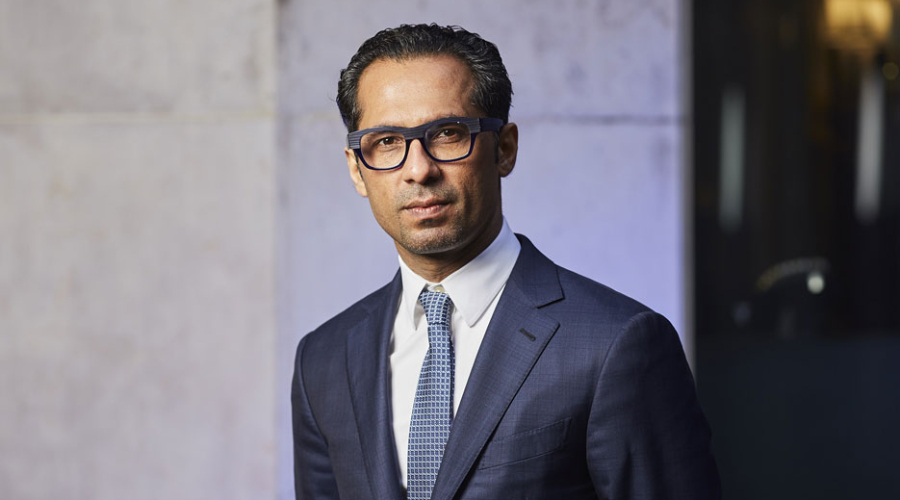
At just 39 years old at the time of this interview, Mohammed (Mo) Gulam Dewji has done more than just build a business; he has become a symbol of what a new Africa represents. He is a rare blend of industrialist, and philanthropist—a strategic thinker who remains deeply rooted in his Tanzanian heritage. To many, he is the visionary CEO of Mohammed Enterprises Tanzania Limited (MeTL). His influence is staggering; MeTL contributes roughly 3.3 per cent of Tanzania’s GDP and provides livelihoods for tens of thousands of families. While Forbes estimated his net worth at $1.5 billion, Mo’s true focus lies far beyond a balance sheet. His empire spans agriculture, manufacturing, and mobile telephony, yet his personal motto, "Forever Better," suggests a man who is never finished growing.
His path was paved by a world-class education, from local Tanzanian classrooms to Georgetown University in the US. However, Mo’s character was truly forged in the values of service and faith. Whether campaigning for better schools during his time in politics or dedicating his wealth to society's most vulnerable, he leads with quiet humility and a deep-seated commitment to helping the disadvantaged. If the next generation of African entrepreneurs emulates his work ethic and moral compass, the continent’s future is in very capable hands. Who’s Who Tanzania sat down with this busy yet remarkably grounded leader to discuss the origins of his success when he was Member of Parliament for Singida Urban.
QUESTION (Q): Could you share with us the story of your early childhood?
ANSWER (A): My story began in Singida in 1975. I was the second born in a family of six, arriving just after my elder sister. My birth was actually a pretty dramatic introduction to the world. My parents had planned for a home birth under the care of a midwife, but things took a scary turn. My mother went through 17 gruelling hours of labour because the umbilical cord was wrapped around my neck—a complication no one realised at the time.
Eventually, the situation became so dire that the doctor insisted on a hospital transfer. Back then, the nearest facility was in Mungaa. Given the rough, bumpy roads of the 1970s, it was a brutal two-and-a-half-hour journey away. Fortunately, against all odds, I was finally delivered safely right there on our home table.
We started our lives in a modest mud house in Singida. By 1979, my life shifted significantly when I moved to Arusha to live with my grandmother and sister. Those early years in Arusha were fascinating. I was attending Arusha School, one of the top primary schools in the country, but I was living away from my parents at a very young age. It taught me independence early on, and those memories remain some of the most defining chapters of my life.
Q: Could you tell us about your educational journey?
A: My academic path later took me from Arusha to the International School of Tanganyika (IST) in Dar es Salaam for Grades 9 through 11. It was at IST that I discovered golf. I took to it quickly and became highly competitive. My younger brother was equally passionate about tennis. After we both excelled in several local tournaments, my father suggested we move to the United States to properly refine our athletic skills.
We ended up at specialised sports academies in Orlando and later Tampa, Florida. It was an incredible, high-achieving environment. In fact, I studied alongside Jennifer Capriati, the former World No 1 tennis player. I still remember graduation; we were both voted as the most accomplished students in our class—she for her phenomenal tennis career, and I because I was serving as the Student Government President.
When graduation neared, I had several golf scholarships on the table. However, I had a moment of hard honesty with myself and realised I wasn’t quite at the level needed to turn professional. I decided to pivot toward my other major strength: business.
I enrolled in Georgetown University, where I majored in International Business and Finance, with a minor in Theology, graduating in 1998. People often ask if I will ever go back for a Master’s degree, but looking at it through a purely business lens, the maths just doesn't work. My opportunity cost for a single hour is roughly $25,000. We have been sitting here chatting for 30 minutes, which means I have technically spent $12,500! I simply cannot justify stepping away from the MeTL Group for an academic degree when the real-world experience and the value of my time are so significant.
Q: Where did your path lead after university?
A: After graduating, I landed a job on Wall Street with JP Morgan. It was incredibly tough. Even with a $40,000 salary and a $20,000 bonus, New York was—and still is—brutally expensive. Between a gruelling 100-hour work week, heavy taxes, and a $2,500 monthly rent for a tiny room in Manhattan, I barely had enough left to eat. I eventually called my father for help, but his message was clear: I was wasting my time in America, and it was time to return home.
I heeded his call, joined the family business, and eventually found my way into politics as Member of Parliament (MP) for Singida Urban. What truly drove me to run was a visit to my birthplace. I hadn't been back to Singida since 1978, and I was devastated by what I saw. I met an old man paddling through filthy water that the entire community, including children, was forced to drink. It broke my heart. No child’s life in Europe is more valuable than a child’s life in Singida, yet these children were dying from preventable, water-borne diseases.
The irony was that the local MP at the time was Minister for Water Musa Nkangaa. When I told my father I wanted to run for that seat, he suggested I run in Dar es Salaam instead, where I was well-known as a Simba Sports Club supporter. But my stance was Singida or nothing. At just 24 years old, I challenged the Minister in the CCM primaries and won 93 per cent of the vote. The party leadership initially blocked my candidacy, claiming I was too young, which caused quite an uprising in the region. I stepped back, supported a neutral candidate in 2000, and finally ran and won the seat in 2005.
Since taking office, we have transformed the constituency. Water access has jumped from 23 per cent to 83 per cent. The number of secondary schools increased from two to 18, and half the students in Singida now study under my personal scholarship. I have spent $4 million of my own money on these projects over the last eight years. I could have bought a private jet, but if I had to choose again, I would give every cent back to the people of Singida. Life is short; giving back is what truly matters.
Q: Do you still maintain connections with your former teachers and classmates?
A: Absolutely. I hold onto those relationships very dearly. I am still in close touch with childhood friends like Yohann Kaluma, George Mambo, Lulu Shabel, and Vincent Shirima. I also vividly remember the teachers who shaped me—from Ms Walala, Ms Ngowi, and Mr Dalal to Mr Fernandez at IST.
At Georgetown, my worldview was sharpened by brilliant minds like Prof Beiss, who taught us leadership and organisational behaviour, and Prof Rivelli in finance. What is truly exciting is how those connections have since evolved into global business partnerships. I am in constant contact with a network of African peers I met during my studies. For instance, I am currently working with a close friend in Dubai, Pasha, to open a bank right here in Tanzania. I also stay connected with Ali in Uganda and Anthony Haga, a fantastic businessman in Sudan.
My connections also extend to my alma mater; I now serve on the Georgetown University Board of Advisers. Being nominated by the Dean to give back to the institution that prepared me for the global stage is an honour I don’t take lightly. It’s a powerful reminder that while business is about numbers, long-term success is built on enduring human networks.
Q: Could you briefly tell us about your journey from leaving school to becoming one of the country's most successful and inspirational icons?
A: My journey began in 1999, when I returned to Tanzania and joined my father’s business. At that time, his enterprise was generating about $30 million in revenue. This year, we are on track to reach almost $1.2 billion. Today, MeTL contributes 3.5 per cent to Tanzania’s GDP and accounts for 5 per cent of all formal employment in the country. With a workforce of 40,000, we have essentially grown the company 30-fold. How did I do it? The formula was one of intense discipline and clear vision. I borrowed initial capital from my father, invested it strategically, and focused heavily on coordinating our investments to ensure they scaled across the wider economy. It was about taking a solid family foundation and building a global-standard conglomerate upon it.
Q: How much did your education in the US influence your business approach in Tanzania?
A: Georgetown was transformative because it is a pressure cooker of excellence. It humbles you. No matter how smart you think you are, you quickly realise you are surrounded by people who are even smarter. The grading system alone is a lesson in high-stakes competition. In most places, 91 per cent is an 'A', but at Georgetown, only the top 6 per cent of the class receives that grade. If you score a 92 per cent, but six other students score higher, you get an A-minus. That environment forces you to be relentless.
Beyond academics, the setting is incredibly cosmopolitan. You walk the same halls as figures like Bill Clinton and King Abdullah of Jordan. We learned from global legends like Madeleine Albright—who taught at Georgetown before and after serving as US Secretary of State—and Henry Kissinger. Most US ambassadors are products of Georgetown. I always had a strong academic base from my schools in Tanzania, but Georgetown took that work ethic and refined it into a globally competitive edge. It taught me that to lead a billion-dollar group, you must be prepared to work harder and think faster than everyone else in the room.
Q: Many see your success today and assume it was an easy path. Could you tell us about your life immediately after university?
A: My journey actually began on Wall Street. After graduating, I landed a coveted position with JP Morgan in New York. On paper, it looked like an ultimate dream, but the reality was incredibly gruelling. I was earning a $40,000 salary with a $20,000 bonus, yet I was working 100 hours a week. New York’s cost of living was—and still is—relentless. Between heavy taxes and paying $2,500 a month for a tiny room in Manhattan, I found myself with almost nothing left for basic necessities. It reached a point where I had to call my father for financial support. His response was a major wake-up call; he told me plainly that I was wasting my time and potential in America and that it was time to return home. I heeded his call in 1999, returned to Tanzania, and joined the family business. That decision was the true turning point in my life.
Q: What motivated you to transition into politics so early in your career?
A: It was a visceral reaction to the inequality I witnessed in my birthplace. Upon returning to Tanzania, I visited Singida and encountered an elderly man paddling through stagnant, contaminated water that the entire community, including children, used for survival. The irony was that the local MP at the time had served as Minister for Water for nearly 14 years. I told my father I wanted to contest the seat. At just 24 years old, I challenged the incumbent in the CCM primaries and won 93 per cent of the vote. While the party leadership initially felt I was too young, the people of Singida rose up to demand my nomination, and I eventually won the seat in 2005. Since taking office, we have transformed the region by focusing on three main areas: increased clean water availability from 23 to 83 per cent, increased the number of secondary schools from two to 18 and funnelled over $4 million of my personal wealth into these projects. Some might buy a private jet with that money; I chose to invest in the dignity and future of the people of Singida.
Q: How did you scale the family business from a local enterprise to a multi-billion Dollar conglomerate?
A: When I returned and joined the business in 1999, MeTL was primarily a trading house generating about $30 million in annual revenue. Today, we have successfully scaled that into a conglomerate with revenue exceeding $2.2 billion.
This growth—representing a 70-fold increase—was achieved through a bold shift from trading to large-scale manufacturing and strategic diversification into over 150 business lines, ranging from textiles and beverages to insurance and mobile telephony. I achieved this by borrowing strategically from my father to prove the viability of industrial projects, and then aggressively reinvesting profits into modern, vertically integrated systems that allow us to compete with global multinationals on both quality and price.
Q: You are widely regarded as an inspirational icon for millions. However, every leader is shaped by those around them. Who are the most influential figures in your life?
A: There are three people who have fundamentally defined who I am today: My father my idol and mentor. He provided the direction and the initial platform that allowed me to become who I am. From him, I learned the aggressive drive and strategic discipline necessary to build an industrial empire. My mother represents the soft side of life that is so often overlooked in business. While my father is driven and sometimes short-tempered, my mother is remarkably calm—someone who chooses peace over conflict. Whenever I faced a crisis, her prayers and quiet support were my anchor. She taught me the value of empathy and patience. Leadership requires immense personal sacrifice, and my wife is the one who carries that burden with me. She raised our children while I was away in Parliament in Dodoma, on the ground in Singida, or travelling abroad for business. Even now, I often leave before the family wakes and return long after they are asleep, only to find her still waiting for me. I am a successful man only because I have had the unwavering support of these three individuals.
Q: As an inspirational icon, what is your advice to the youth of Tanzania and Africa who are navigating this era of global uncertainty?
A: My advice is simple, but firm: you cannot become wealthy overnight. The road to glory is constructed brick by brick; there are no shortcuts. To attain lasting success, you must embody discipline, hard work, honesty, and credibility. You cannot simply “talk the talk”; you must “walk the walk.” You need a clear strategy and a roadmap that defines exactly where you want to go, and then you must have the stamina to implement it effectively. Furthermore, I believe we are an incredibly lucky generation. If you are an entrepreneur in Tanzania, East Africa, or Africa as a whole, you are in the right place at the right time. While regions like Europe face immense stagnation and uncertainty, Africa is the frontier of world growth for the next decade. Do not look elsewhere for opportunity. Put your head down, develop a unique idea, and work relentlessly to build it. You are already standing on the continent of the future—now you must discipline yourself to lead it.
Q: As a Member of Parliament, what is your final message to your constituents in Singida?
A: My message is one of profound gratitude and love. I deeply love the people of Singida; not a single day passes without thinking about my constituency and how to further improve the lives of the people there. Serving them gives me a level of satisfaction that business alone—no matter how successful—simply cannot provide. I am aware that they pray for me, and I, in turn, pray for them every day. My only wish is that God continues to give me a big heart and the strength to continue serving them, giving back to the very place where my story began.
Note: This interview was conducted during Mohammed Dewji’s tenure as the Member of Parliament for Singida Urban.